
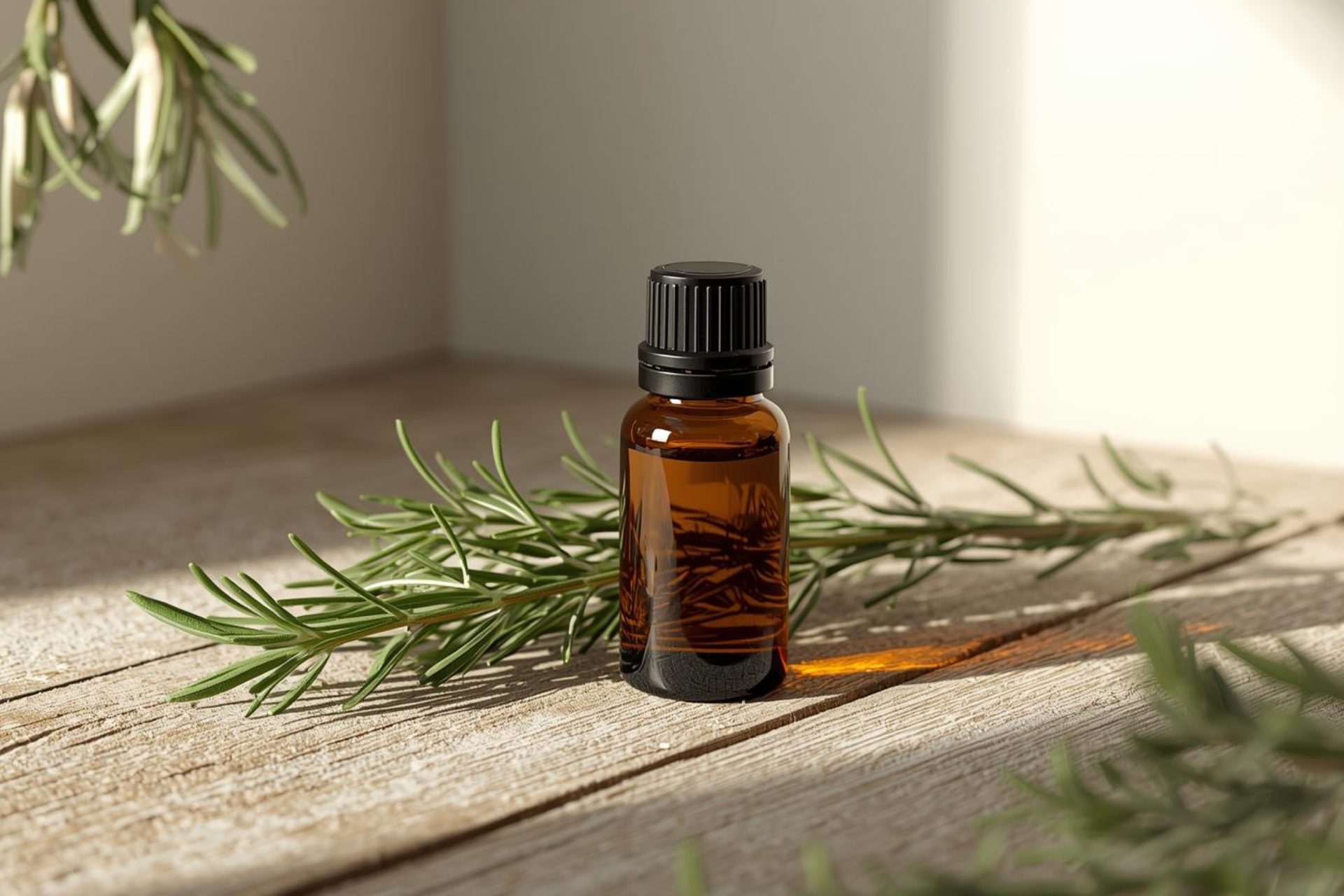
Rosemary essential oil is widely used for mental clarity, focus and overall vitality. Known since ancient times as a plant of memory and strength, rosemary remains one of the most practical essential oils for daily, holistic use.
This guide explains what rosemary essential oil is, how it works, how to use it safely, and when it may or may not be the right choice for you.
Quick facts
- Botanical name: Rosmarinus officinalis
- Plant part used: leaves and flowering tops
- Extraction: steam distillation
- Aroma profile: fresh, herbaceous, green, slightly camphor-like
- Strength: medium to strong
- Best for: focus, memory, mental fatigue, scalp care, muscle comfort
- Blends well with: peppermint, lemon, eucalyptus, lavender, frankincense, basil, cedarwood
- Safety note: stimulating oil, best used earlier in the day
What is rosemary essential oil and where does it come from
Rosemary essential oil comes from a woody evergreen shrub native to the Mediterranean region. The plant thrives in sunny, dry climates and has been used for centuries as both a culinary and medicinal herb.
The oil is distilled from the leaves and flowering tops, where aromatic compounds naturally concentrate to protect the plant and give it its strong, fresh scent.
How rosemary essential oil is extracted
Rosemary essential oil is obtained through steam distillation. This method preserves the oil’s active compounds and results in a clear, potent essential oil with a sharp, herbal aroma.
Aroma profile
Rosemary essential oil smells clean, fresh and energizing. Many people describe it as a scent that “clears the mind.”
It acts mainly as a top to middle note in blends.
A short history of rosemary use
In ancient Greece and Rome, rosemary was associated with memory, learning and mental sharpness. Students were known to wear rosemary garlands while studying, believing it helped concentration and recall.
Throughout European traditional herbalism, rosemary was used to support circulation, digestion and muscle comfort, as well as in baths and massages for strength and vitality.
Main uses of rosemary essential oil today
Focus, memory and mental clarity
Rosemary essential oil is best known for its effect on the mind. Research and aromatherapy practice suggest that inhaling rosemary aroma may support alertness, concentration and memory recall.
Well-known educators such as Dr. Josh Axe and Dr. Eric Zielinski often mention rosemary as an oil for cognitive support and mental stimulation.
How to use:
- Diffuse 2–3 drops while working or studying
- Inhale from palms for a quick mental reset
Mental fatigue and low energy
Rosemary has a stimulating effect that many people find helpful when feeling mentally tired but still needing to stay productive.
How to use:
- Diffuse in the morning or early afternoon
- Use in a personal inhaler during long workdays
Muscles and joints
Due to its warming and invigorating properties, rosemary is often included in massage blends for tired or overworked muscles.
How to use:
- Dilute 2–3 drops in one tablespoon of carrier oil
- Massage into shoulders, neck, back or legs
Scalp and hair care
Rosemary essential oil is commonly used in natural hair routines. It supports scalp comfort and is often included in blends for hair vitality and freshness.
How to use:
- Add 1–2 drops to shampoo or conditioner
- Dilute in carrier oil and massage into the scalp before washing
Less-known uses of rosemary essential oil
- Voice and speaking support: some people diffuse rosemary before teaching or public speaking
- Mental grounding: helpful when the mind feels scattered rather than tired
- Home care: adds freshness to natural cleaning blends
Real-life experiences
Many users report that rosemary essential oil:
- helps them stay focused without feeling overstimulated
- feels “clear” and “sharp,” not calming or sedating
- is especially useful during periods of mental overload or planning
In aromatherapy communities, rosemary is often described as “the oil that helps you think clearly again.”
Oils that blend well with rosemary
by intention
- For focus: peppermint, lemon, basil
- For breathing: eucalyptus, tea tree
- For calm clarity: lavender, frankincense
- For muscles: marjoram, black pepper
Common blend association
Rosemary is often found in protective blends, such as protective blend (doTERRA On Guard), where it adds freshness and clarity.
Emotional support
Emotionally, rosemary essential oil is often chosen when:
- the mind feels overloaded
- clarity is needed more than relaxation
- motivation is low but rest is not the solution
It supports mental presence, confidence and decisiveness.
Simple emotional ritual:
Inhale rosemary slowly and ask yourself:
“What actually needs my attention right now?”
Holistic use: body, mind and home
Body
- morning diffuser routines
- post-work massage for tension areas
Mind
- study sessions
- decision-making moments
- mental reset during long days
Home
- diffused during work-from-home hours
- added to DIY cleaning sprays for a fresh herbal scent
Why I would use rosemary essential oil – and why I might avoid it
Why I would use it
- when focus and clarity are needed
- during mental fatigue without relying on caffeine
- for scalp and hair routines
- during periods of intense thinking or planning
Why I would avoid it or use with care
- late in the evening, as it may disturb sleep
- if sensitive to strong, stimulating aromas
- undiluted on the skin
- with young children without proper dilution
How to use rosemary essential oil safely
- Topical dilution:
- adults: 1–2%
- children: higher dilution (around 20%)
- Diffusion: 15–30 minutes per session
- Avoid contact with eyes and mucous membranes
- Always perform a patch test before topical use
Simple recipes
Focus diffuser
- 2 drops rosemary
- 2 drops lemon
Scalp oil (10 ml roll-on)
- 2 drops rosemary
- 1 drop cedarwood
- fill with carrier oil
Muscle massage blend (30 ml)
- 4 drops rosemary
- 3 drops lavender
- carrier oil
Frequently asked questions
Is rosemary essential oil good for sleep?
Usually not. It is stimulating and better suited for daytime use.
Can rosemary essential oil be used for children?
Yes, with proper dilution and short diffusion times.
Does rosemary essential oil help memory?
Many studies and user experiences suggest it supports alertness and mental clarity.
Is it safe to diffuse daily?
Yes, when used in moderation.
Sources and further reading
- Aromatherapy research on cognition and alertness
- Dr. Josh Axe – essential oil education
- Dr. Eric Zielinski – natural wellness resources
- General aromatherapy safety guidelines


